what I'm excited about
The vibe has been bad since the start of the 2020s. Pandemic, then inflation, then war, then more war and inflation, then AI doom. So I wanted to write something more optimistic. Nothing serious, just some technologies that are exciting to me.
Chips
One of the bottlenecks for LLM inference is memory bandwidth. As it is increasingly difficult to shrink transistor size, we will rely more on advanced packaging. This will be the secular trend in the next decade.
I vaguely remember seeing an article about 3D memory and tiled chips in MicroComputer magazine when I was in middle school. The article was about Intel’s Tera-scale research processor in the lab. The idea felt futuristic: many-core chips, stacked memory, and various chips packaged together.
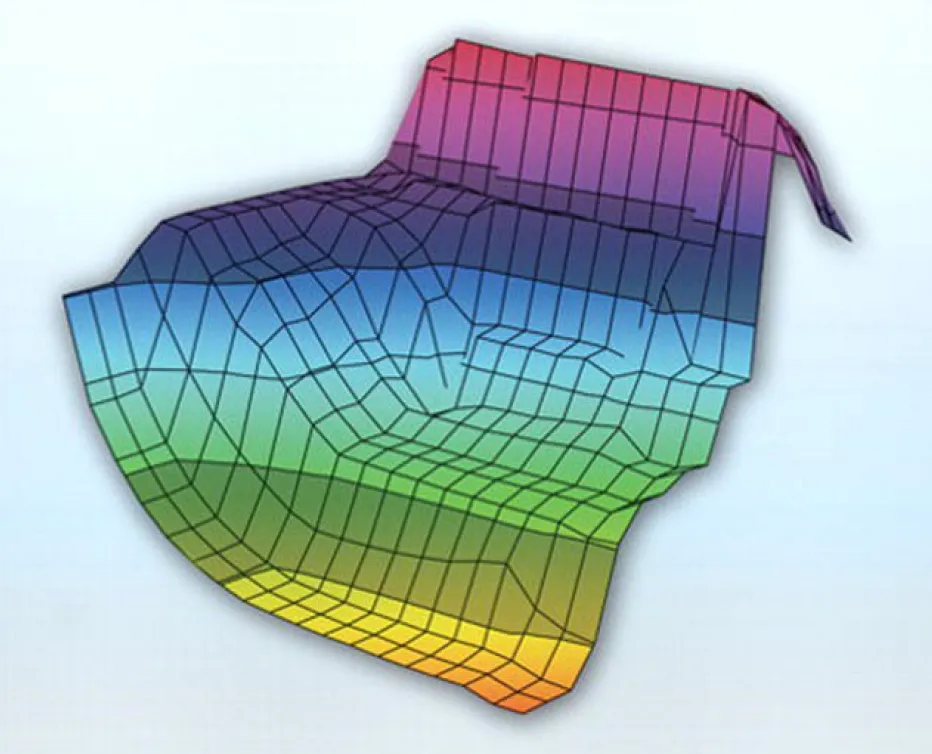
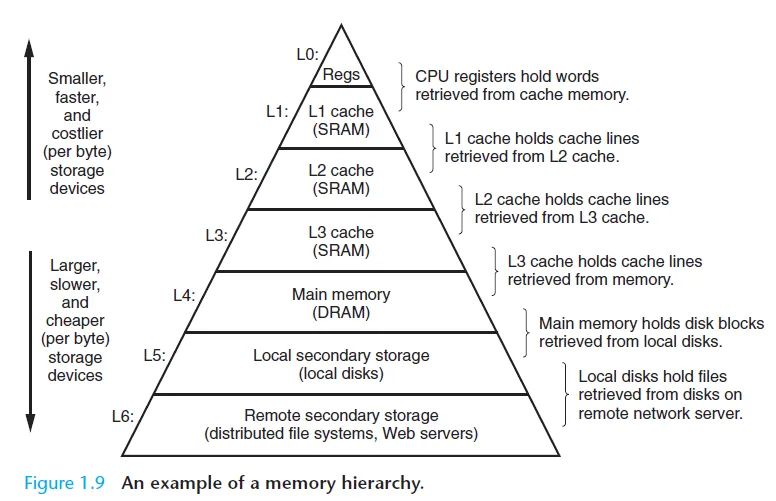
Years later, the first course I took after entering UW’s CS major was Hardware/Software Interface. The textbook, Computer Systems: A Programmer’s Perspective, had the famous “memory mountain” graph. That image stuck with me. It was a simple way to show that computing is not just about arithmetic throughput. Memory latency, bandwidth, locality, and hierarchy matter just as much — sometimes more.
 Computer Systems: A Programmer's Perspective
Compute got dramatically faster over the last four decades. Processor clocks went from a few MHz to a few GHz, and parallelism turned a single CPU core into GPUs, SIMD units, and finally matrix engines. Peak arithmetic throughput went up by something like a million-fold, depending on what you compare. Memory bandwidth improved too, but not nearly as fast. More importantly, moving data stayed expensive. A multiply on a modern chip can cost picojoules or less, especially in specialized low-precision hardware. Pulling the operands from off-chip DRAM can cost hundreds to thousands of picojoules. The computing part of computing got cheap. The data-shuffling part didn’t.
One way to alleviate this is to add more cache layers (L1/L2/L3). Another way to fix this is to physically shorten the wires. Think of it like a city. If you only build one-floor buildings, you get Los Angeles, endless sprawl, traffic everywhere, and long commutes between everything. Build tall and dense and you get Manhattan. Same number of people, much shorter trips, you don’t even need a car. Chips have been LA for fifty years. Advanced packaging is the move to Manhattan.
The progression:
- Motherboard memory. DIMMs on a stick. Centimeters between CPU and DRAM. Slow, hot, energy-hungry per bit. Where most servers still are.
- On-package memory (SiP). What Apple's M-series does. The LPDDR chips sit millimeters from the SoC on the same substrate. Not exotic packaging, just very short wires. This is most of why Apple Silicon's perf-per-watt looks like magic — they got rid of the slowest hop in the memory hierarchy by moving the DRAM next door.
- Fan-out interconnect. AMD's Strix Halo APU uses TSMC InFO-oS between the CPU and the larger SoC. The energy cost of moving a bit dropped from about 2 picojoules on previous-gen Infinity Fabric to about 0.2 picojoules on fan-out. One order of magnitude more efficient from advanced packaging.
- 2.5D with silicon interposer. Apple's UltraFusion, AMD's MI300, Nvidia’s B300, anything from TSMC CoWoS. A thin silicon layer between two dies acts as a wiring substrate denser than any organic package can be. Blackwell achieved a memory bandwidth of 8TB/s using CoWoS.
- 3D hybrid bonding. Direct copper-to-copper bonds between dies, no solder bumps, contact pitch under a micron. AMD’s 3D V-cache already does this.
The thing that makes this exciting beyond the chip industry itself is what it enables downstream. Edge AI starts to work when you can fit enough memory close enough to compute, on a thermal envelope that fits in a laptop or a phone. We're not there yet. We will be there soon. More on that in a minute.
Energy
The most boring optimism story is also the biggest. Solar is now getting extremely cheap. Utility-scale solar in good locations comes in under $30 a megawatt-hour. New combined-cycle gas runs $50-100. New coal $70-170. New nuclear north of $140. In sunny regions, solar has already won the cost fight against everything you can burn or split. Battery storage drops by about 15% a year. The cost curve has been running for thirty years and shows no sign of stopping.
I put a solar plus battery system on my California home last year. Here's the cumulative cash flow:
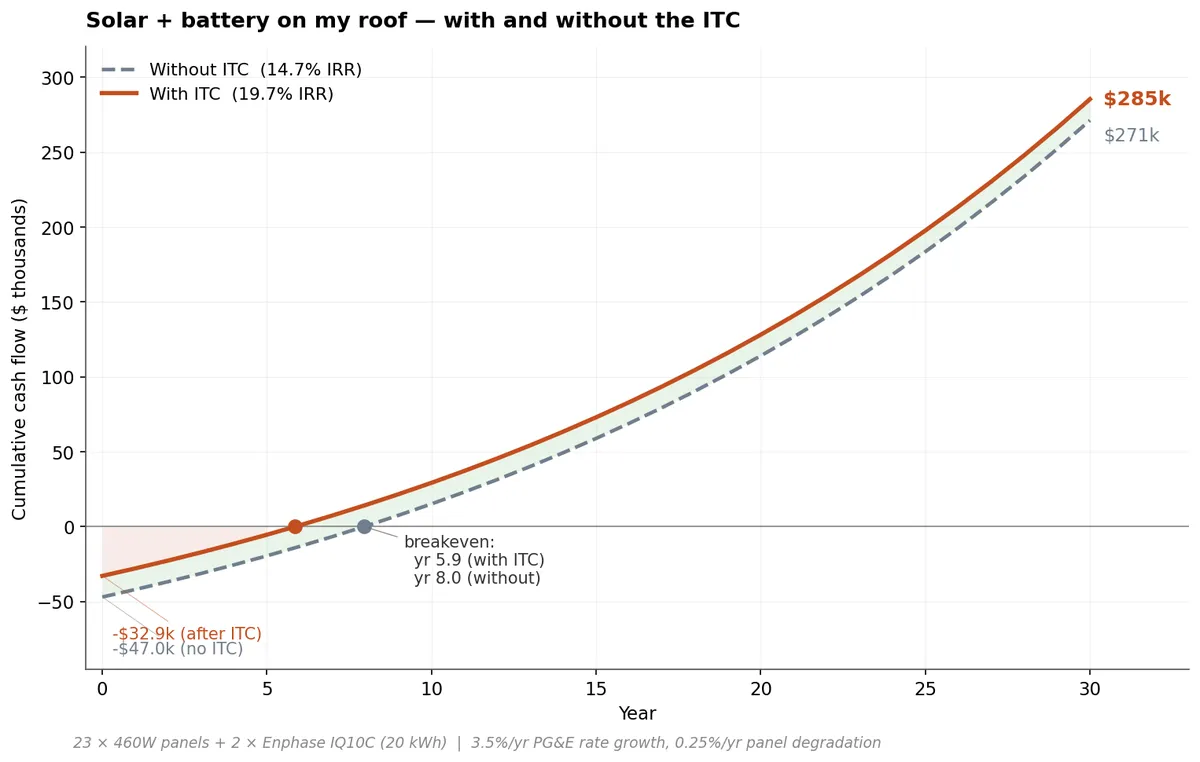
19% IRR with the federal tax credit, 14% without. The return is better than the S&P 500. In California, it's economically irresponsible not to use solar panels and batteries.
The exciting near-term technology is tandem PV. Silicon has a fixed electron bandgap, which means photons below a certain energy aren't absorbed at all, and photons above it lose the excess as heat. That caps single-junction cells at about 33.7% efficiency, aka the Shockley-Queisser limit. However, if we stack a perovskite layer on top of the silicon, then the combined cell can absorb a wider slice of the spectrum, breaking the limit. LONGi hit 34.85% in a lab cell last year. The theoretical ceiling for such a two-junction tandem cell is around 43%. We can even do triple-junction and reach a theoretical limit of 50%. Commercial tandem solar cells began shipping in 2026, at 24-29% efficiency. I expect PV efficiency to continue to climb year over year. As panels keep getting cheaper per watt, overbuilding capacity to address intermittency might be cheaper than gas peaker plants. Solar adoption is accelerating globally, and it might finally get us off fossil fuels.
Geothermal is the other one I keep an eye on. It's been ~0.5% of global electricity for decades, because conventional geothermal needs heat, water, and permeable rock, all naturally co-located. There is only a handful of volcanic spots that satisfy. Hard to scale a global energy source out of geological lottery tickets.
Enhanced geothermal (EGS) widens the constraint. You drill deep enough to find hot rock, 3-5 km in places with elevated heat flow, then fracture it and pump water through the cracks yourself. You're manufacturing the reservoir instead of finding one. The problem stops being "where" and becomes "how cheaply can you drill," which is exactly what the oil and gas industry has been spending fifty years solving.
And unlike solar, geothermal is 24/7 power, with a capacity factor north of 90% and dispatchable on top of that. It can serve as the clean baseload and as load-shifting plants in the future, replacing existing gas power plants.
Fervo's Cape Station in Utah is the project to watch. 500 MW total by 2028. The current cost is still well above gas, closer to nuclear today, but Fervo cut drilling costs by two-thirds across projects, and drilling rates are converging toward standard oil and gas performance. DOE's $45/MWh by 2035 target would put EGS below combined-cycle gas. Same drill rigs, same crews, different hole.
Space
I wrote about Rocket Lab a while back. The short version: launch costs are in secular decline. The constellation business model is the obvious near-term application.
The interesting new thing is the lunar program. After 54 years since the last Apollo mission, we finally flew beyond low Earth orbit once again, and this time as the first step toward a long-term lunar presence. The new lunar habitat, in-situ resource utilization, etc., are all very exciting projects. The Moon will be our training ground for making humanity multi-planetary.
Finally, new industries will be born as launch costs decline.
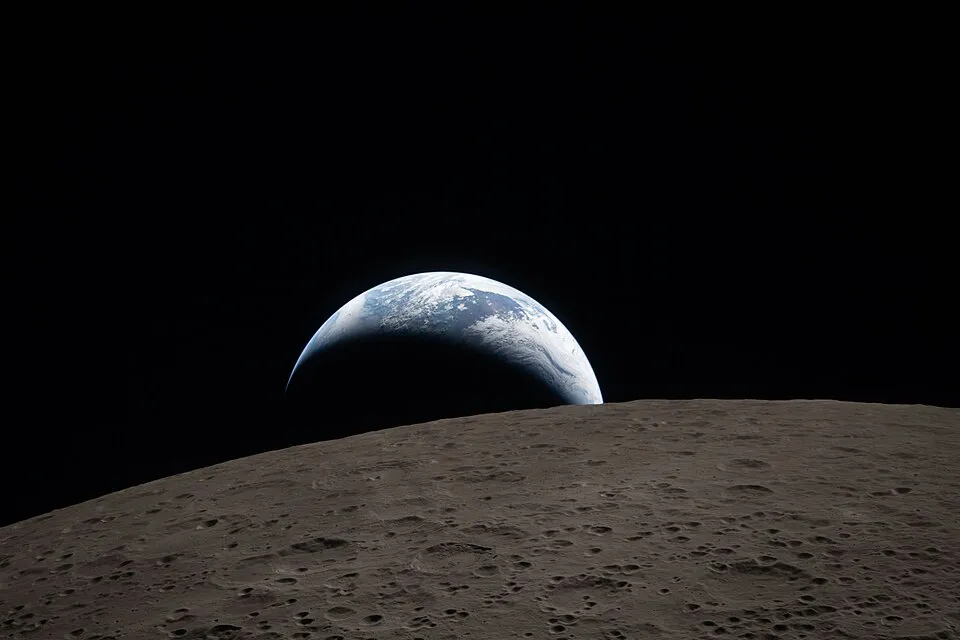 Earthset, by astronaut Christina Koch aboard Integrity
Robotics
Robotics is going to be slower than people think. It's exciting anyway.
The reason it's slow is that physical data is hard to collect. You can't scrape it the way you scraped the internet for LLM training. Every robot policy needs hours of real-world interaction with real physics.
What gets me excited:
Waymo is on the verge of actually working. They’ve passed the experiment phase now and are doing the ugly scaling work city by city. Self-driving has been the most embarrassing tech promise of the last decade, and Waymo is the one that's quietly almost there.
Amazon has the largest robotics installation base in the world inside its warehouses. Boring, undercovered. Not a pure play, but the advancement in robotics would benefit Amazon significantly.
Physical Intelligence is the frontier research lab. Open-weight VLA models. All-Star team. Might be the OpenAI in robotics?
World Models are the hottest topic right now. We will see when we have a good enough model that generalizes to a wide range of robotics tasks.
I look forward to the day I can buy a household robot that does all the chores.
Biology
Biotech is the biggest disappointment.
I was excited about mRNA after the covid vaccines. It looked like a platform, fast design, programmable, the kind of thing that would let biotech finally scale like software. However, five years later, the cancer vaccine readouts are slow, and the flu mRNA shots underperformed. Each new product is still bespoke. Biology resists software scaling, and mRNA was the cleanest test of whether that pattern would break. It didn't.
AI helps with drug discovery in the obvious way, search space reduction at the top of the funnel. You can screen a billion candidate molecules computationally before doing any wet-lab work. But the bottleneck isn't the search, it's everything after. Cells take however long cells take to grow. Animal trials take years. Phase 3 trials take longer. Regulatory review takes longer still. None of this compresses to software-scaling speed. Robotics can help the wet lab, but not enough to change the structure.
I hope there will be a breakthrough, but for now, I will just be monitoring.
AI
I'll save the long version for another post.
The short version is that AI inference costs decay exponentially in the long run. It will diffuse through society. A capability that requires a billion-dollar cluster in 2026 may run on a laptop in 2029. Most consumer requests don't need frontier capability anyway. The economics of running everything through a hyperscaler datacenter look less obvious every quarter.
Apple looks dumb right now for not setting fire to billions in capex on frontier training. They'll look smart in three years. They own end-user distribution, the device, the OS, the silicon, and the privacy story. Apple can simply wait for the model to come to them.
In a few years, advanced packaging will make it possible to run large models locally, inside the memory and power envelope of ordinary consumer devices.